Respect

vs. Rudeness
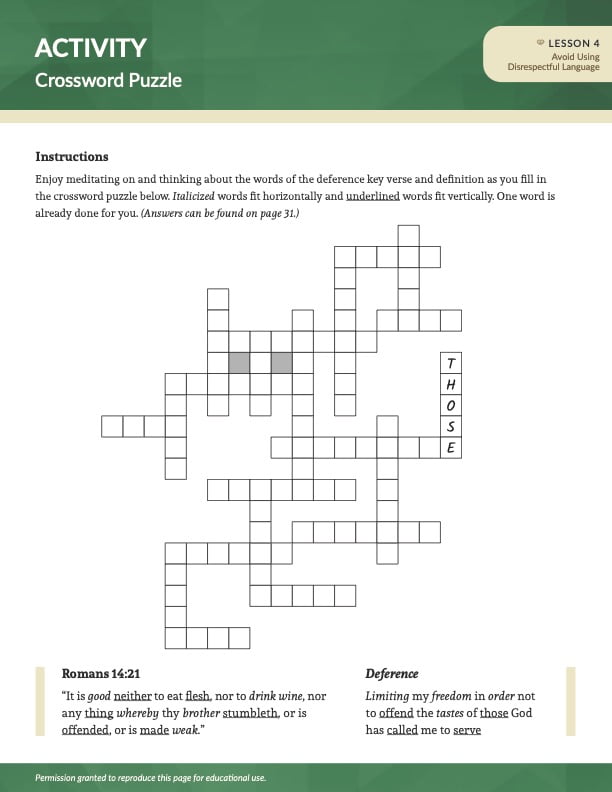
Limiting my freedom in order not to offend the tastes of those God has called me to serve

Verset cheie

“It is good neither to eat flesh, nor to drink wine, nor any thing whereby thy brother stumbleth, or is offended, or is made weak.”
Romans 14:21

The operational definition of deference is “limiting my freedom in order not to offend the tastes of those God has called me to serve.” Everyone you are called to serve—your parents, siblings, neighbors, church family—has preferences. Maybe your mom wants a specific cleaner used on a certain type of surface. Possibly you are asked to load the dishwasher a precise way. Perhaps you share a bedroom with your sister, and she would like to paint it a certain color or organize it a different way. Maybe a neighbor needs assistance with a project and prefers that you come at a specific time. A person’s preferences may or may not seem important to you. However, by setting aside what you think is best or most efficient and honoring their choice or desire, you are demonstrating deference. Deference communicates Christ’s love as you give preference to others above yourself in order to be a blessing to them. “Be kindly affectioned one to another with brotherly love; in honour preferring one another” (Romans 12:10).

When we show deference, others are unhindered by us in their journey with the Lord.
When we do not show deference, we become an obstacle that hinders others in their journey with the Lord.

The opposite of deference is rudeness. A rude person is unpleasant to be around because he only seems to think about himself. Such a person is inconsiderate. He will turn on a light when someone else is trying to sleep. When someone is on the phone, he impolitely continues to talk loudly. He thoughtlessly plows ahead with his own schedule, ideas, and preferences without consulting others or being willing to change his plans for them. His coarse words and actions are hurtful and offensive. His rude behavior is in stark contrast to Paul’s prayer in Philippians 1:9–10: “And this I pray, that your love may abound yet more and more in knowledge and in all judgment; That ye may be sincere and without offence till the day of Christ.”

Evaluare personală

  • Am I motivated by genuine love for others, and do I seek their good above my own?
  • Do I pay attention to my surroundings so that I can avoid causing an offense?
  • What in my home might cause family members or visitors to stumble spiritually?
  • Is the music in my home uplifting and spiritually encouraging to my family?
  • Do I justify my music or activities that may offend or weaken fellow Christians?
  • Do my words, actions, or attire create difficulties or cause hindrances for others?
  • Do I honor others even when it is inconvenient?
  • When a decision needs to be made, do I ask others what their preferences or thoughts are?
  • Am I more interested in debating and proving my point than in understanding another’s perspective?
  • Do I often find myself in the middle of a conflict, or do I look for ways to be a peacemaker?

Articole

“There is no such thing as being a gentleman at important moments; it is at unimportant moments that a man is a gentleman....If once his mind is possessed in any strong degree with the knowledge that he is a gentleman, he will soon cease to be one.”
G. K. Chesterton
Transformarea are loc atunci când privim la Domnul și ne bizuim pe lucrarea Duhului Sfânt în viețile noastre. „Noi toți privim cu fața descoperită, ca într-o oglindă, slava Domnului și suntem schimbați în același chip al Lui, din slavă în slavă, prin Duhul Domnului” (2 Corinteni 3:18). Văzând caracterul lui Dumnezeu în mărturia Scripturii, creștem în înțelegere și ascultare de Cuvântul Său. Iată zece aspecte vis-a-vis de Respect precum și versetele biblice care stau la baza lor:

Dumnezeu mă împuternicește…

K

Respect the preferences of others.

“Be kindly affectioned one to another with brotherly love; in honour preferring one another.” ROMANS 12:10
K

Refrain from causing offense.

“But if thy brother be grieved with thy meat, now walkest thou not charitably. Destroy not him with thy meat, for whom Christ died. . . . Let us therefore follow after the things which make for peace, and things wherewith one may edify another.” ROMANS 14:15, 19
K

Use music to edify others.

“Let the word of Christ dwell in you richly in all wisdom; teaching and admonishing one another in psalms and hymns and spiritual songs, singing with grace in your hearts to the Lord.” COLOSSIANS 3:16
K

Be constrained by His love.

“Behold, if God so loved us, we ought also to love one another.” I JOHN 4:11
K

Notice those around me.

“Look not every man on his own things, but every man also on the things of others.” PHILIPPIANS 2:4
K

Avoid using disrespectful language.

“But the tongue can no man tame; it is an unruly evil, full of deadly poison. Therewith bless we God, even the Father; and therewith curse we men, which are made after the similitude of God. Out of the same mouth proceedeth blessing and cursing. My brethren, these things ought not so to be.” JAMES 3:8–10
K

Know that my attire conveys a message.

“In like manner also, that women adorn themselves in modest apparel, with shamefacedness and sobriety; not with broided hair, or gold, or pearls, or costly array; But (which becometh women professing godliness) with good works.” I TIMOTHY 2:9–10
K

Steer clear of arguments about differences.

“But foolish and unlearned questions avoid, knowing that they do gender strifes.” II TIMOTHY 2:23
K

Be a good example.

“In all things shewing thyself a pattern of good works: in doctrine shewing uncorruptness, gravity, sincerity, Sound speech, that cannot be condemned; that he that is of the contrary part may be ashamed, having no evil thing to say of you.” TITUS 2:7–8
K

Seek resolution of conflicts.

“Therefore if thou bring thy gift to the altar, and there rememberest that thy brother hath ought against thee; Leave there thy gift before the altar, and go thy way; first be reconciled to thy brother, and then come and offer thy gift.” MATTHEW 5:23–24

Povestire biblică

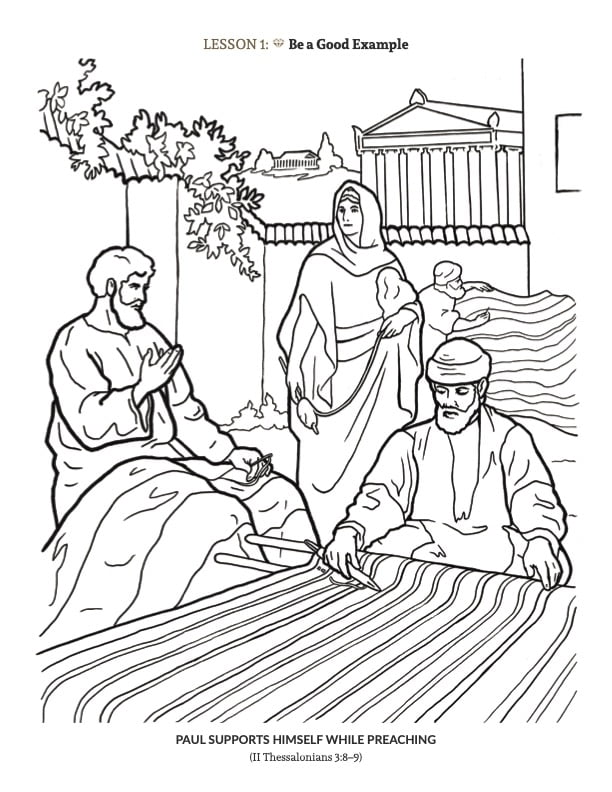
Paul Supports Himself While Preaching
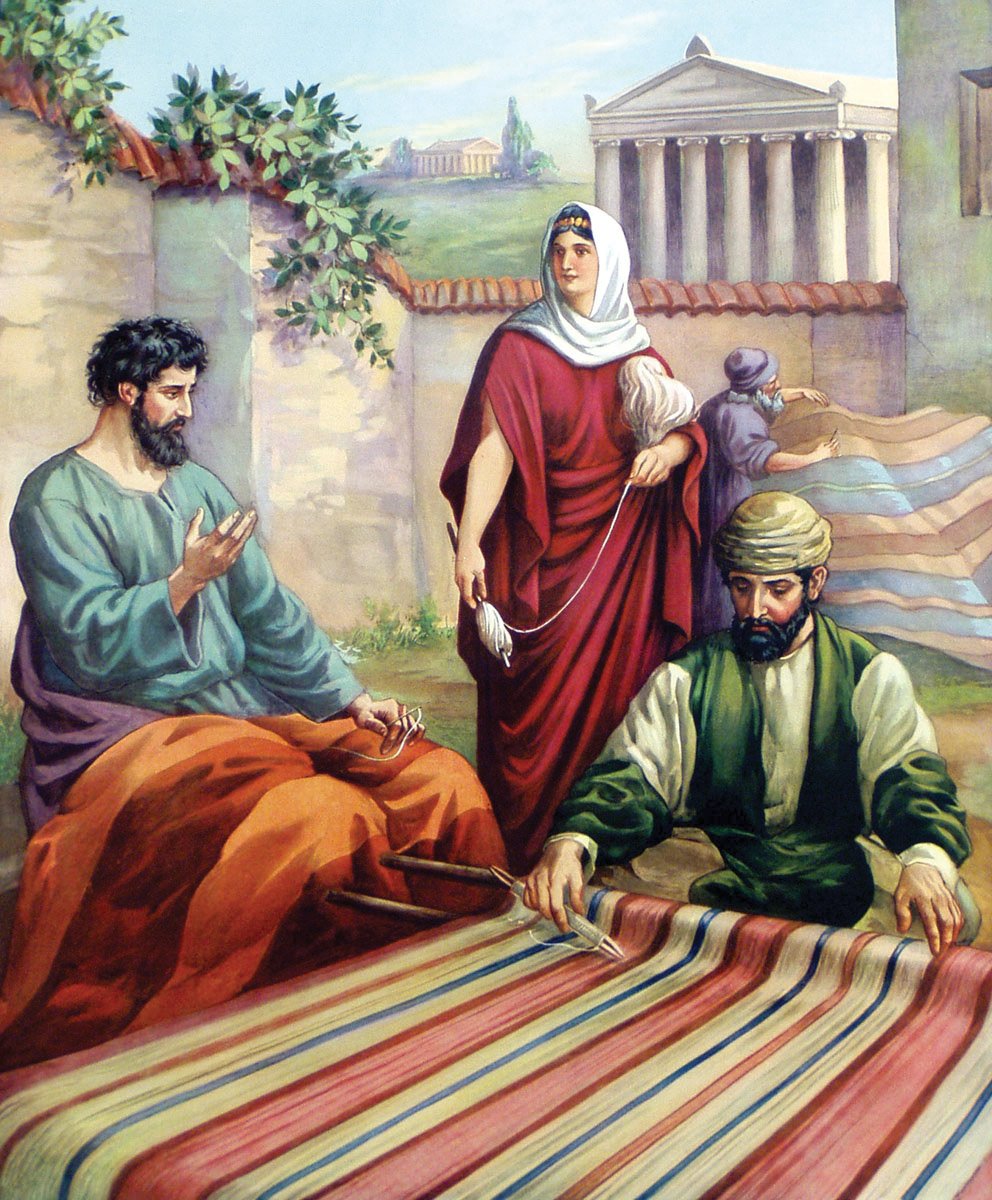
“We . . . wrought with labour and travail night and day, that we might not be chargeable to any of you: Not because we have not power, but to make ourselves an ensample unto you to follow us.”
II Thessalonians 3:8–9
Having just finished ministering in Athens, the Apostle Paul traveled to Corinth. Well-known for his bold, outspoken commitment to Jesus Christ, he spent his days discipling new believers in the faith and writing under the inspiration of the Holy Spirit. Paul knew that as a minister, he had a Biblical right to expect financial support from believers. However, Paul was teaching that men ought to work hard so they could have food, support their families, and help other believers. If he taught this principle without working himself, would people listen to him? If others saw Paul not working at an occupation, would they be tempted to justify their own tendency toward laziness? Seeing the possible impact of his example, Paul willingly set aside this freedom and worked to support himself as he was ministering to others. Paul’s deference avoided an offense that could have hindered the cause of Christ. How did Paul support himself as he traveled from place to place and preached? While in Corinth, Paul lived with a husband and wife who shared his profession. How did the apostle’s good example affect the couple with whom he lived and worked? What else do Paul’s epistles teach about deference?

Analogie în natură

Timber Wolf

The very life of a timber wolf depends upon its ability to show deference to the leader of the pack. If an “underling” asserts itself in any way, the leader will attack it in fury until the offending wolf offers its neck as an acknowledgment that it was not under authority.

Curriculum pentru copii

Manuale ilustrate, cu învățături biblice despre caracter (En)

Manualele ilustrate, cu învățături biblice despre caracter, folosesc exemple din viața unor bărbați și femei din Biblie, a căror umblare cu Dumnezeu a dus la un caracter bun sau a căror lipsă de credință a produs un caracter slab. Learning deference helps children realize that, although we may be free to do many things, we gladly restrain ourselves because communicating God’s love to others has become more important to us than our preferences.

Pagini demonstrative: Respect (En)

Achiziționează manualul Respect (En) cu toate cele patru lecții și activități pe IBLP.org:

Fișe gratuite: Respect (En)

Bucură-te de aceste selecții din Manualele ilustrate, cu învățături biblice despre caracter!
Fișă de colorat

Căutare de cuvinte

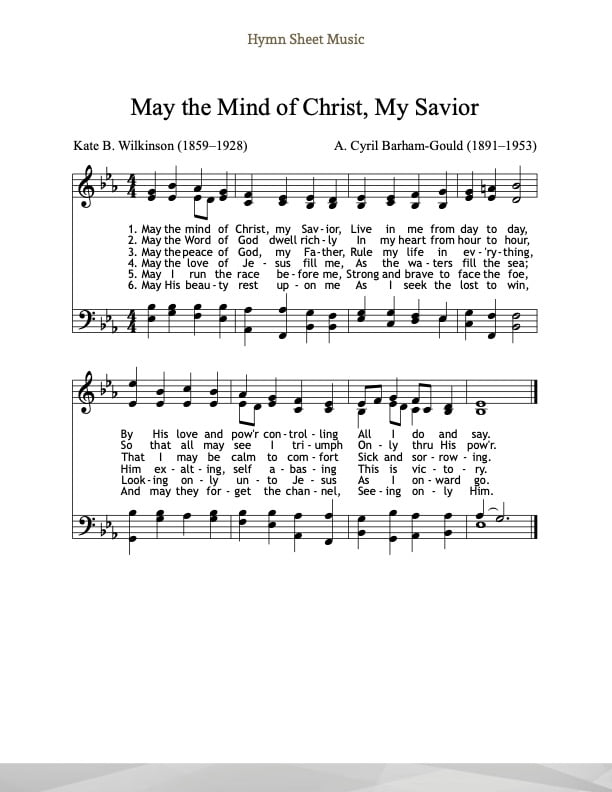
Imn tematic

“Be kindly affectioned one to another with brotherly love; in honour preferring one another.”
Romans 12:10